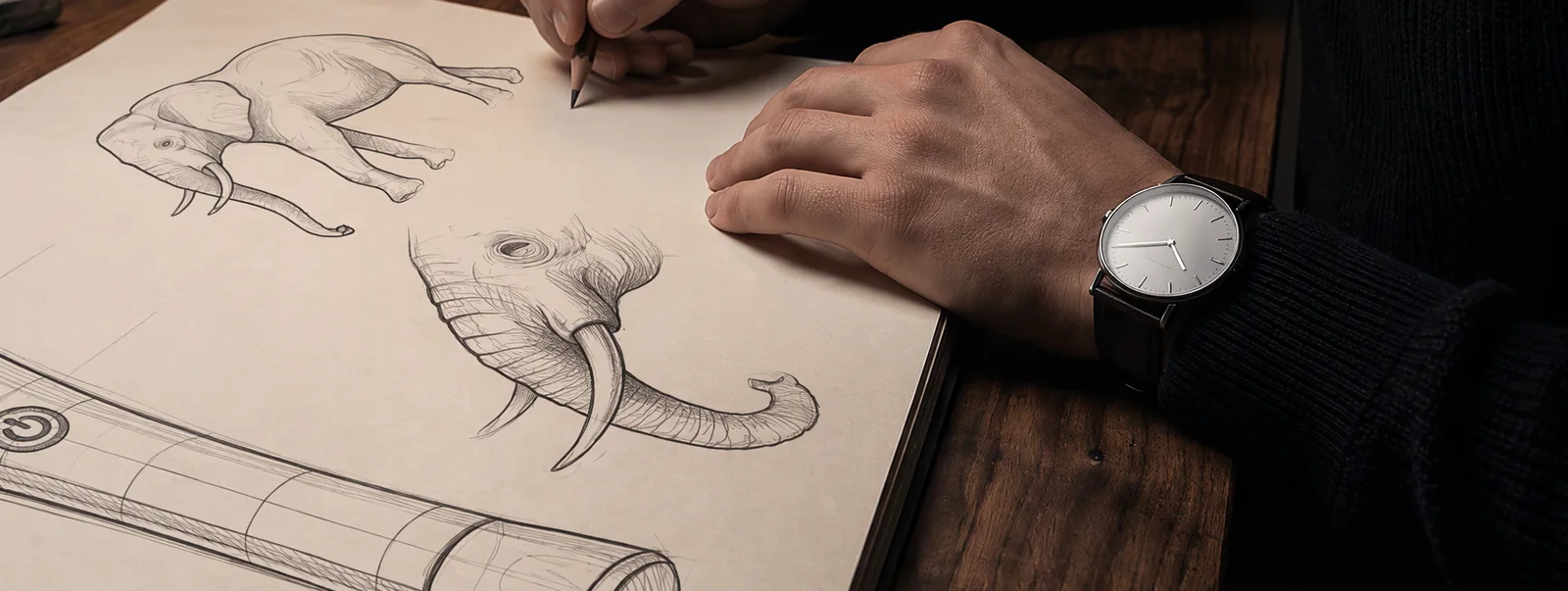
The idea
A beam of white light hits a prism.
It bends. It spreads. It becomes a spectrum. That is not just a physics lesson — it is the logic behind every product we make.
A prism is the most honest light-controlling device there is. It does not create light. It changes its direction, breaks down what it is made of, and sends each part exactly where it needs to go.
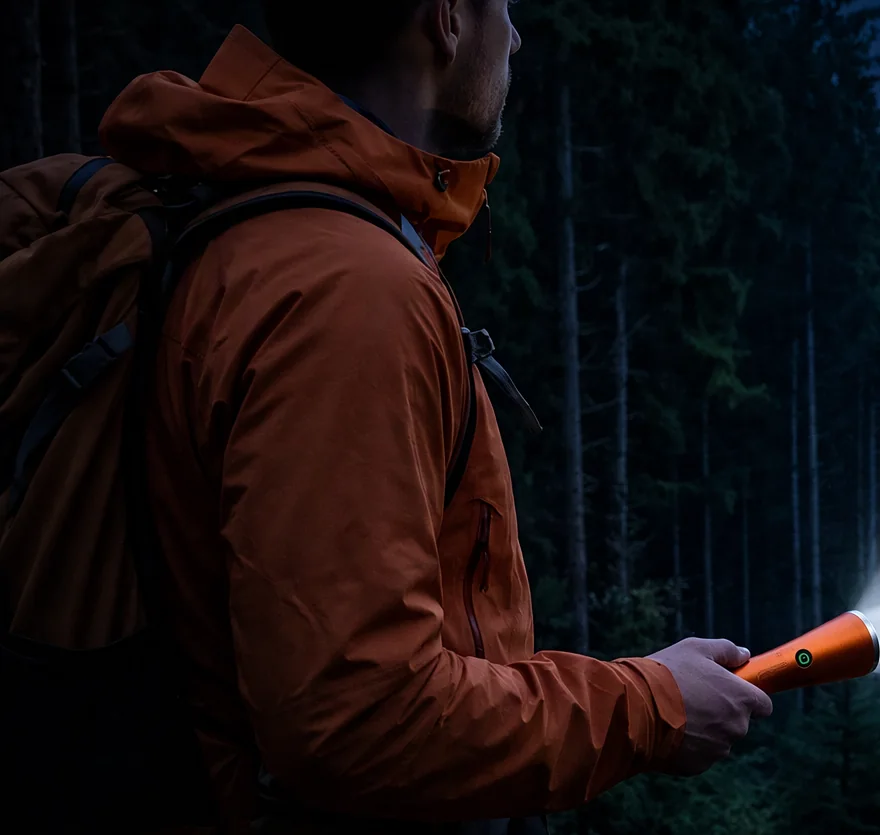
Prism is the method.
Luma is the result.
Luma is what you are handed at the end: light that has been precisely engineered. A beam that reaches 720 feet. A spectrum you can see by.
We are not an outdoor brand that bought a flashlight, and not an optoelectronics company that made a catalog. We come from upstream in the optical supply chain, where the emitter, the reflector and the lens are chosen.
That is why the PL-E01 starts with the beam, not the body. The reflector is chosen for the shape of the light. The driver is chosen to hold it steady. The body exists to protect that decision.
One product today. A headlamp and a night-vision monocular are on the bench. The rule does not change: understand the light, then command it.
After sunset, most of your gear stops working.
Light is the most underrated resource in the outdoors. The moment the sun goes down, the overwhelming majority of what you carry becomes dead weight.
We think that is a design failure, not a fact of nature. Our whole business is the hours after dark — the trail at your feet, the tent line at 2 a.m., the fuse box in a blackout.
When you command light, darkness stops being a boundary. It becomes your territory.
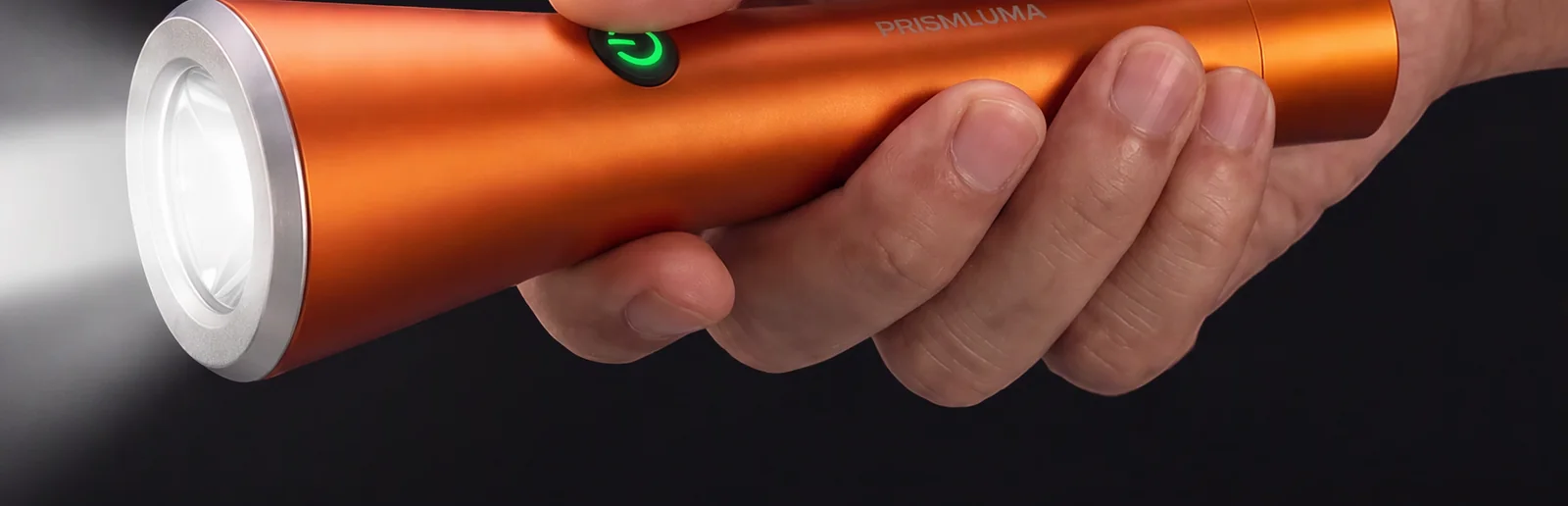
The bench
One product today. More on the way.
PL-E01 is our first release: a pocket flashlight built to hold its brightness rather than fade, and to survive being dropped, soaked and frozen.
A headlamp for a whole campsite, and a night-vision monocular that reads detail three hundred meters out, are in development.